The Interview:
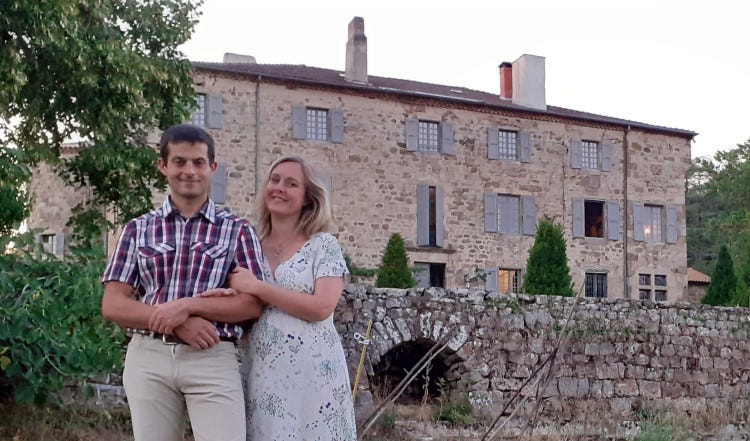
British born Amy and French born Marc met on the tropical island of Montserrat, known as the ‘Pompeii of the Caribbean’ - each of them had decided to move there to pursue new ventures. After living in a tiny house in the jungle for a year, the newly married couple tentatively began looking for a ‘little place’ in Europe that they could return to.
“We began searching on the internet for properties that we could get with our savings and it became clear that France was our best bet. You could get so much for your money!
“We found one property online that we loved, and after discussions with an estate agent she suggested a two day tour of properties in Provence, Drôme and Ardèche. We had so much fun, and saw some gorgeous places, but when we saw Château de Rosiéres in Ardèche, it really felt like we’d come home.”
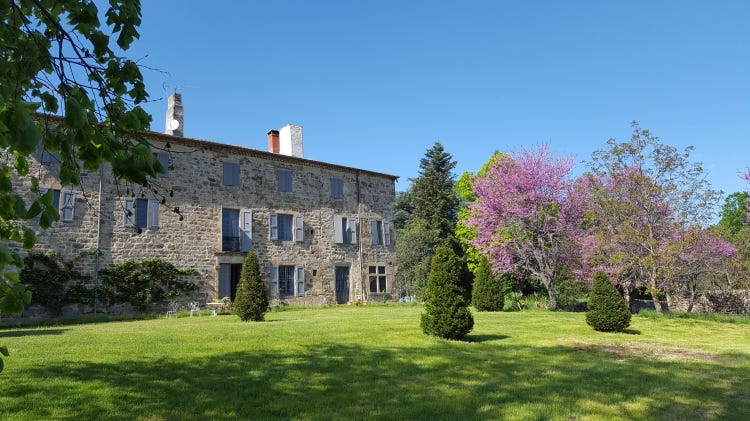
Amy and Marc are now the proud owners of Château de Rosiéres and adjusting to life in a 32 room abode!
How did you go from living on a tiny island in the Caribbean, to owning a Château in rural France?
When we were living in Montserrat, we gradually came to realise that it wasn’t the sort of place where we could spread our wings. The island wasn’t supportive enough of new enterprises by outsiders and it became clear that it would be difficult for us to succeed there.
We wanted to find somewhere to live that was new to us both but not desperately far from all of Marc’s family. That narrowed it down to the bottom half of France and we just started contacting estate agents who were selling unusual properties! Our criteria was very vague. We either wanted something small and we would create a business outside the home, or something large enough to support a business that we could run from the property. I had long harboured a desire to run a yoga retreat centre and I think that this was at the back of my mind.
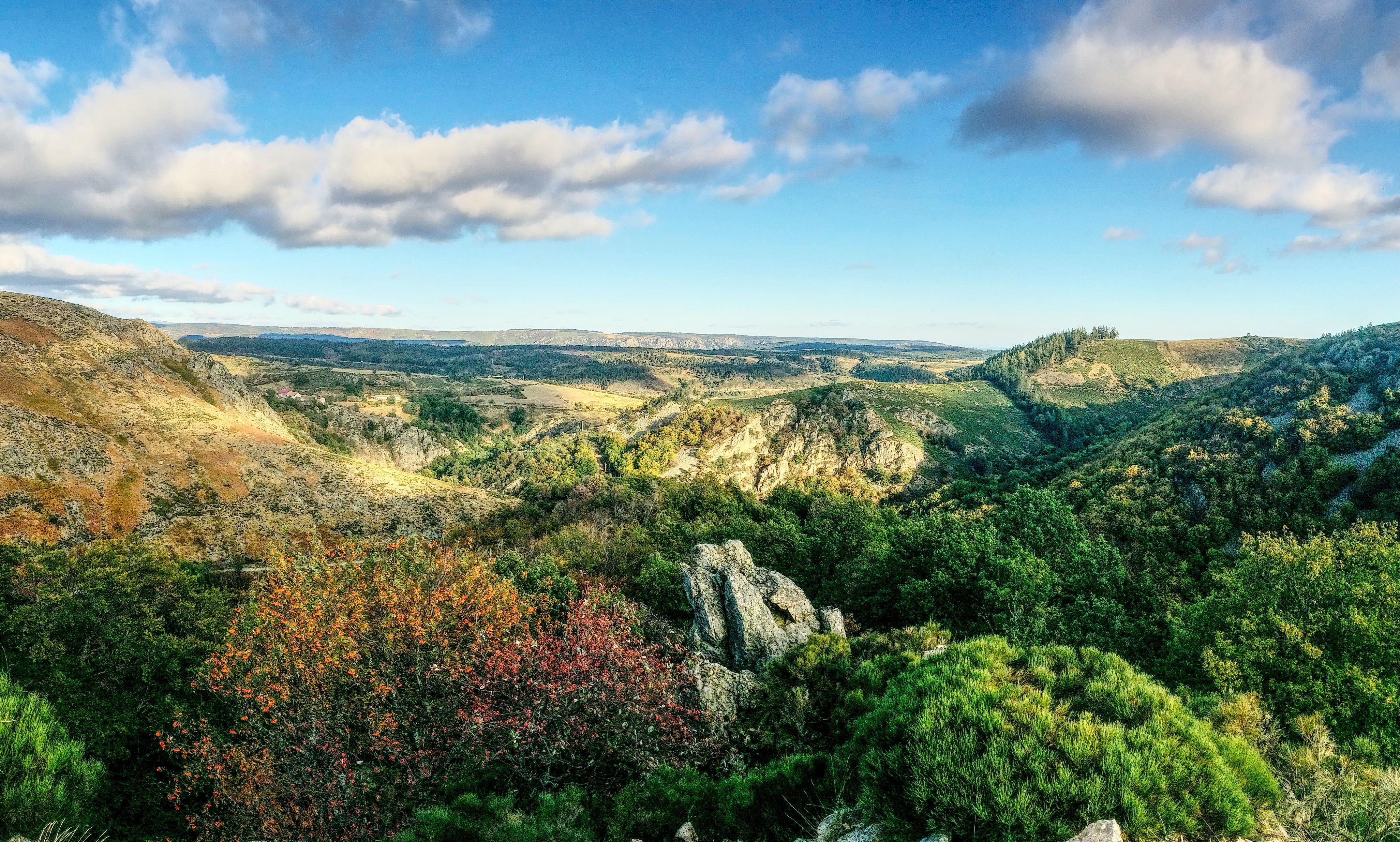
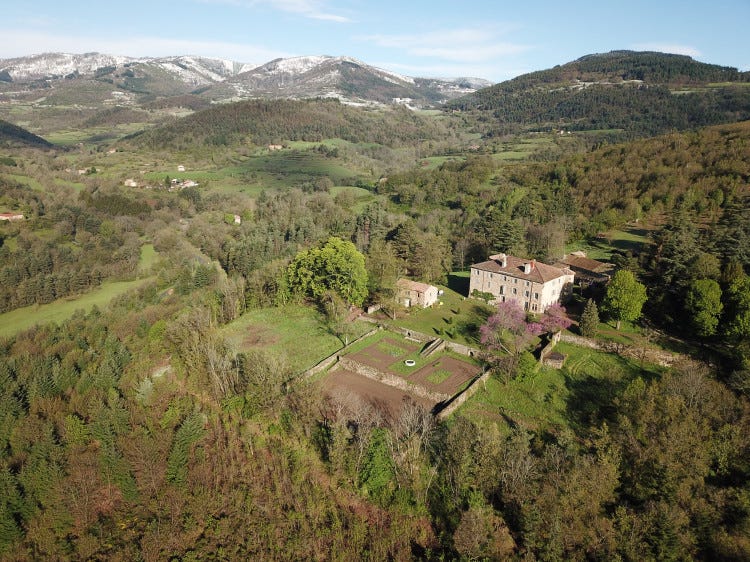
When we saw Château de Rosiéres it really felt like we’d come home. Marc was not at all familiar with Ardèche, and knew next to nothing about the north of the département, which is greener and more forested than the popular tourist destinations of southern Ardèche. As we wound our way up steep country roads from the Rhône Valley, we instantly fell for the feeling of the area. It was on the cusp of the true wild, but was peppered with small fields and farmhouses.
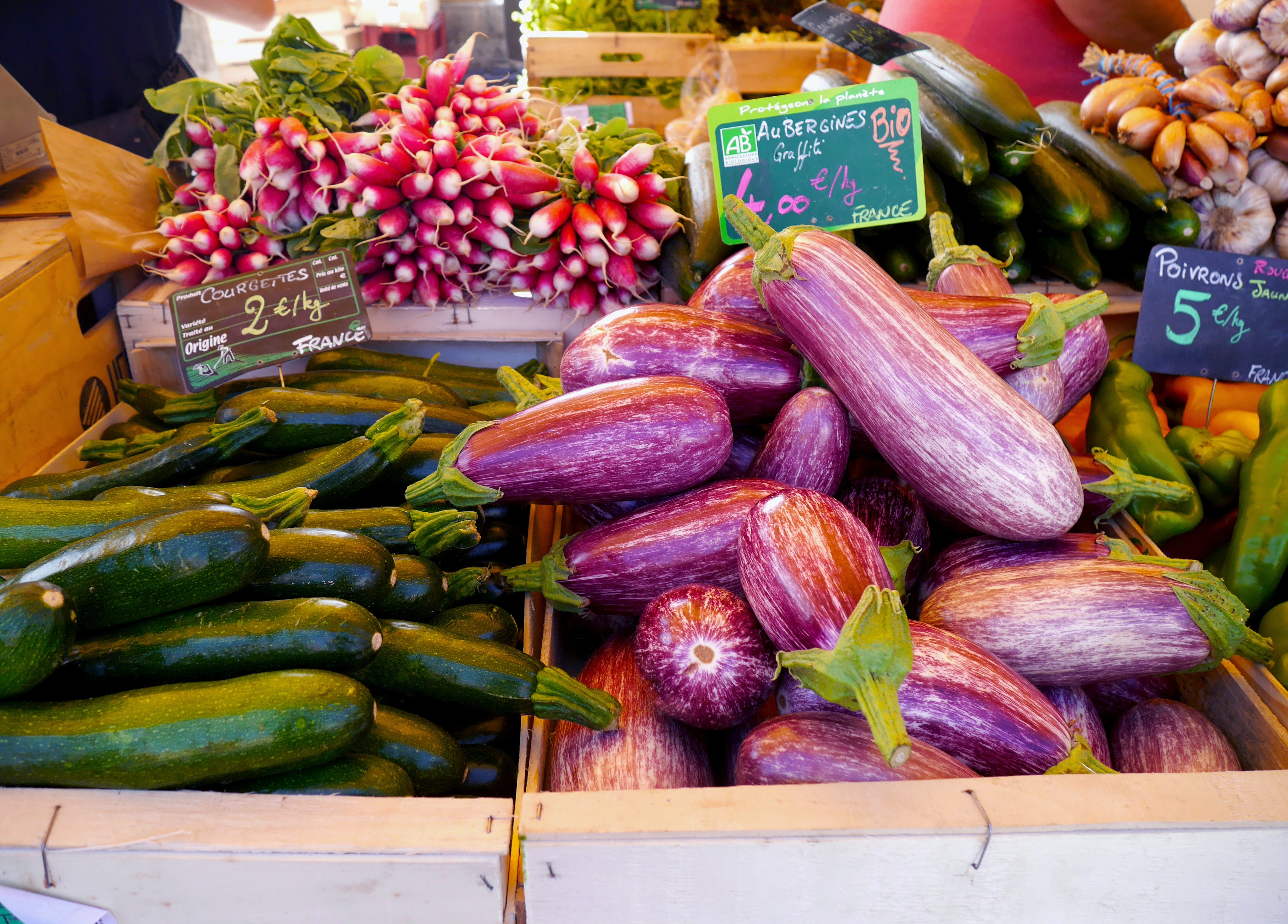
The farms are buried in the valleys, giving it a lived in feel, but the hills and mountains above them are dense forest where wild boar and even the odd wolf call home. The buildings of the area are all of square, warm-coloured granite and were unlike anything we’d seen elsewhere in the world. ‘Our’ village is a lived-in, rural community (quite rare these days) with many small shops, two schools, and even a small hospital. The big supermarkets are a 45 minute drive away and this means small local producers at markets are actually used by most people, rather than remaining the preserve of the wealthy.
Then came the house. Marc calls it a ‘big pile of stones’. It has a slightly rough exterior, from its fortified past, but inside it’s warm and peaceful, with metre-thick walls and a wonderful history of renovations ranging from medieval times to the 19th century (the less said about the ‘70s renovations, the better!)
More than just the château however, there was around 100 acres of forest, terraced gardens, and several more houses and outbuildings in dire need of rescue. The lightbulb went on for both of us when we saw this. We both recognised a family home, and the potential for our own ambitions - Marc a farm and me a retreat centre for wellbeing and craft courses such as yoga, meditation, writing and painting.
How did you make the transition to working in France?
Our lives are now our home. We rent out our previous home, which gives us some income, and do a little consulting, but we mostly live off our savings and throw all of our time and effort into turning this into a viable business so that we can recoup our investment and sustain our life here. This is quite a precarious situation financially but we have confidence in our vision as everybody who visits is very enthusiastic about the place and our ideas.
Let’s talk about living costs - how do they compare to pre-relocation life?
Buying in France is a matter of searching estate agencies and websites. Like many things in France, it works better to get personal connections rather than use amalgamation sites. Many agencies don’t put all of their places on their websites, let alone submit them to Zoopla or the like. So the best thing is to define the areas that you like and then get your name with as many local agencies as possible. Also just turn up and visit them. Face to face works much better here.
Renting in the area that you’re interested in is a good idea rather than leaping into buying somewhere when you’ve not tried it out. We didn’t take that advice but then we weren’t even sure we wanted to buy anything at the time and we got carried away.
Leboncoin is also an excellent way to find bargains. It’s a little like Gumtree but people use it for everything. You can put alerts on key words and narrow it down to departments and even smaller areas. It can cut out the middle man but even agencies advertise on it.
The French buying process is more regulated than the British one which actually makes it less stressful on the whole. But it’s important to find yourself a good notary to dig into the nitty gritty because there can be important little issues to do with water or access rights, or other issues, particularly where there’s land involved.
The process is no longer or shorter than elsewhere on the whole - it just depends whether it’s a straightforward sale or not! A ‘hand holding’ service can be invaluable if you don’t speak the language well.

How do your property and living costs per month compare with your pre relocation life?
The cost of everything to do with the château is so much higher than anywhere we lived before because, well, it’s a château! But day to day life here in the countryside is more affordable because we grow our own food, we go out less, and we are just content to live a very simple and inexpensive life!
What are your insider's tips for Ardèche?
We tell our friends to grab their boots and get hiking, or hire an electric bike from the village. There are hundreds of kilometres of small roads and forest paths to explore and you’ll have them almost completely to yourself! The twice weekly markets in the village are lovely, and in summer our main activity is to go to the little brocantes - essentially village jumble sales - that happen every weekend. Not only are they great places to pick up bargains but they’re usually very festive affairs involving food and drink tents, live music, and a wonderful atmosphere!
What do you miss the most?
For me the language barrier is perhaps the most difficult. I’m a talker and whilst I can get by in French now, it’s hard to have really close friends when you can’t express the subtleties in life! I would advise anybody planning to relocate to make a big effort with the language in advance!
If you had to pick another place in Europe to relocate to, where would you go?
We both love Switzerland and it was a key contender before we settled on France.
If you could give any advice to somebody reading this now who might be considering a move to France what would it be?
Take your time to find the right place. The living experience varies hugely between villages, let alone different areas. But be brave - visit places you’ve never heard of. So many ex pats end up in the same part of France because it’s where they went on holiday as a child or where their friends or family have a second home. There are so many other wonderful areas! If you want to make sure that you can still buy baked beans at the supermarket then a big ex pat community can be nice. But if you want to plunge into French life, and live in some truly spectacular places, you may want to expand your horizons!
Make sure you know whether you want to be remote or near to a community. It can be tempting to opt for the middle of nowhere, but it’s lovely to be in a place where neighbours can just pop round, and you can feel part of village life. Also being able to run to the local shop quickly isn’t to be underestimated!
If a place is really cheap, there is always a reason. Some of those reasons you might be fine with, but some you may not see immediately. A lot can be to do with the location - next to something ugly or smelly or noisy. Or that there’s no local community or beautiful views. I spotted so many cheap châteaux in one particular department but Marc said that it was a flat, boring area full of industrial agriculture and terrible weather. I’m sure he was exaggerating, but I’d rather live in a little cottage somewhere wonderful and inspiring than in a huge, beautiful house that I never wanted to venture out from.
Unseen renovation expenses are another area where you can come unstuck on big buildings, because you only need to miss one thing and it has the potential to be a huge expense Friends of ours bought a massive, near-derelict house for almost nothing, and were very excited because the money estimated to do it up would still make it a total bargain for where it was. However major structural issues emerged and having poured lots of money in, they are now faced with having to finish the job by paying more than the equivalent house would be new, because to leave it half finished would be to lose everything. I know this is the same anywhere in the world, but people often get dazzled by châteaux and don’t realise the sheer scale of any jobs related to them!